China Home Expo | Real Estate Recovery Energizes the Home Furnishings Market
China Home Expo has foreseen the consumption dividend brought by the recovery of the real estate market. As the domestic real estate market in many regions shows signs of moderate recovery, downstream consumption chains such as home furnishings, home appliances, and home decoration are embracing new development opportunities. Numerous emerging home furnishing brands have adjusted their development strategies and are making all-out efforts to expand their offline new retail presence.
In recent months, the transaction volume of second-hand homes in key cities across China has continued to climb, effectively stimulating deferred demand for home renovation, furniture replacement, and whole-house furnishing.
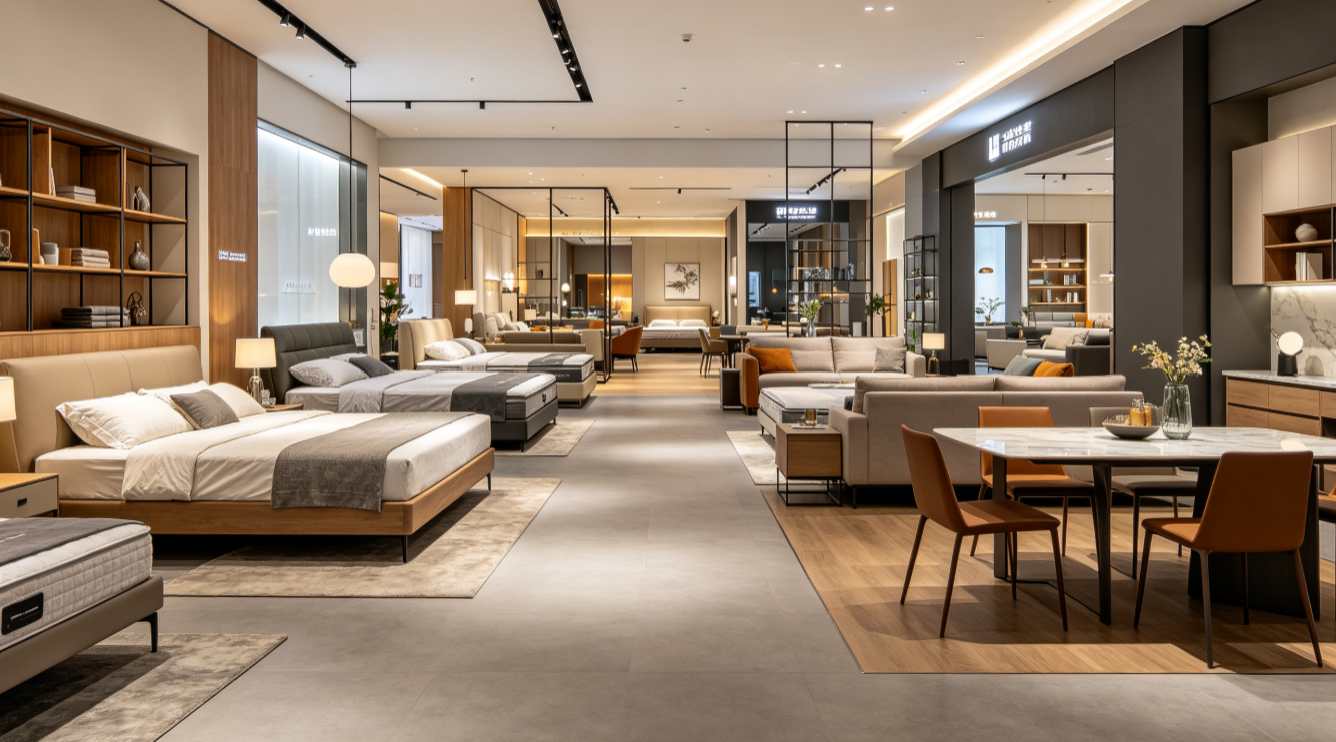
The rollout of offline new retail layouts has enabled home furnishing brands to break through the limitations of the industry's traditional off-season. Even during the post-618 sales lull, major offline stores continue to deliver impressive performance.
A large number of potential customers who previously browsed and hesitated online have been converted into direct purchases after experiencing product texture, functionality, and comfort in-store. This has also driven cross-selling of multiple complementary products, effectively boosting overall store sales and average order value. With its long-standing deep engagement in the home furnishings industry, China Home Expo has clearly captured this emerging trend of consumers shifting from online to offline, and has witnessed how emerging home furnishing brands have achieved breakthrough sales performance through physical experiential retail.
The steady recovery of the real estate market is the core foundation driving the rebound of the home furnishings consumption market. According to data from the China Index Academy, in the first half of this year, cumulative transactions of second-hand residential properties in 20 key cities reached 761,000 units, representing a year-on-year increase of 5.6%. First-tier cities have performed particularly well, with both Shanghai and Beijing seeing steady year-on-year growth in second-hand home transaction volume, injecting ample incremental consumption into the downstream home furnishings market.
In response to the continuously released consumption demand, companies across the home furnishings industry chain have accelerated their business model upgrades, moving away from single-channel online sales to focus on scenario-based stores and an integrated online-offline new retail model. Many home furnishing brands that previously focused exclusively on online channels have opened physical showrooms to compensate for the shortcomings of online-only consumption.
For large home furnishings such as smart beds and mattresses, online images and videos alone cannot give consumers a genuine sense of product quality and core functionality. Moreover, the return and exchange process for bulky items is cumbersome and costly, leading consumers to generally adopt a "try before you buy" approach. The establishment of offline showrooms has significantly improved brands' conversion rates, average order values, and cross-selling rates.
Compared to the limitations of single-item online shopping, offline stores offer distinct core advantages. Customers can bring their floor plans to the store and, with the professional guidance of designers, finalize whole-home furnishing layout plans tailored to their living needs, completing entire home furnishing decisions in just a few hours. This dramatically shortens the consumer decision-making cycle.
The evolution of the consumer demographic is also driving innovation in the home furnishings industry's business models. According to relevant research data, people aged 21 to 41 have become the dominant force in home furnishings consumption, accounting for as much as 56% of the market, with post-90s and post-00s young consumers leading the way. This demographic favors personalized, scenario-based consumption and has formed a new consumption path of "online discovery, offline experience, and integrated decision-making."
The creation of new retail home furnishing venues precisely aligns with the core needs of young consumers, filling the experiential gap left by pure online shopping. At the same time, policy support is also safeguarding the transformation of home furnishings retail. Multiple government departments have jointly issued relevant guidance, explicitly supporting the development of immersive retail scenarios and promoting the upgrade of offline retail toward experiential, diversified, and social formats.
Industry experts analyze that China's retail sector has entered a critical period of structural transformation. Competition is no longer limited to product pricing; scenario-based experience and service quality have become core competitive factors. As an experiential consumption sector, the home furnishings industry is seeing the value of offline new retail become increasingly prominent.
The two-way integration of online and offline channels has become the prevailing trend in the home furnishings industry's development. Major home furnishing stores and brands continue to deepen their commitment to experiential new retail, constantly activating the young consumer market and optimizing the industry's consumption ecosystem. Through continuous model innovation and scenario upgrades, the home furnishings industry will leverage the industry exchange and exhibition platform built by China Home Expo to continuously unlock new consumption potential and embark on a new journey of quality home furnishings consumption.
Source: toutiao